1
Clean the casings
Rinse and inspect casings or tripe pockets carefully, then drain.
clean
25:00
Libyan stuffed sausage parcels filled with rice, lamb, herbs, liver, and spices, then simmered until tender.
Use this overview to check the occasion, serving ideas, regional context, and cooking commitment before you begin.
Best for Eid al-Adha, weddings, and large family feasts.. Plan on a hard cook and about 165 minutes total.
Couscous, tomato sauce, salad, or soup from the cooking broth.
Libya national table. A structured Libya dish in the AfroKitchen archive.
Each recipe supports one main image and up to four extra prep, serving, or step photos when they are available.
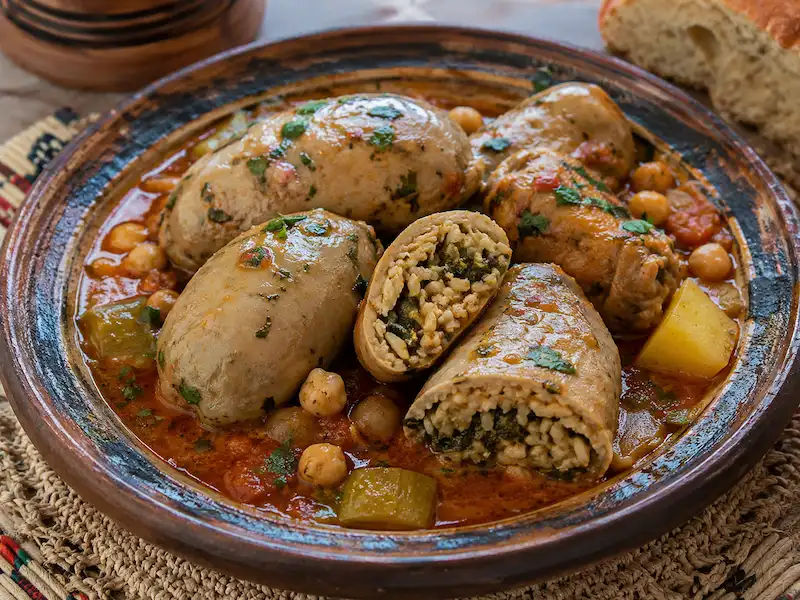
Couscous, tomato sauce, salad, or soup from the cooking broth.
Libya national table
Keep the rhythm calm, watch the texture, and adjust seasoning at the end.
Libyan homes may add lamb liver, heart, herbs, rice, tomato, and chili, while Tunisian and Algerian versions vary the offal mix and spice level.
Follow country, category, collection, time, and pairing paths without turning the recipe page into a link farm.
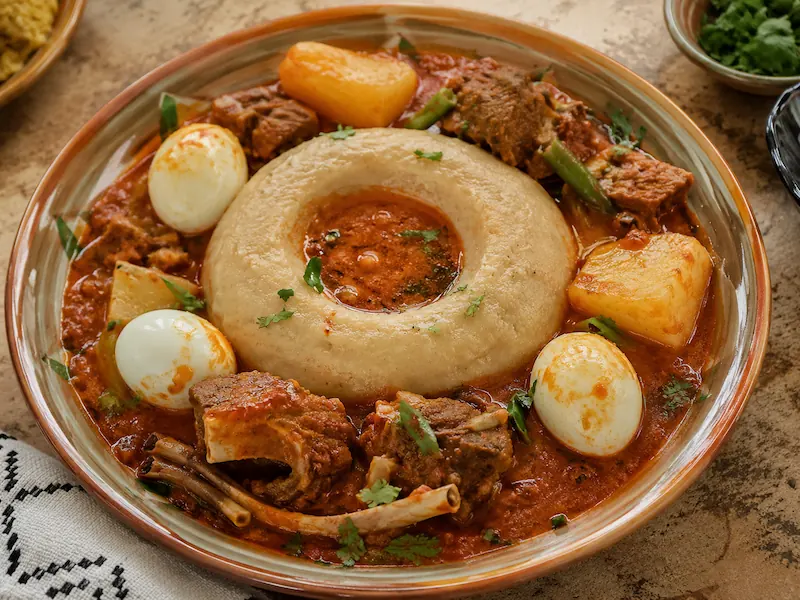 Libya
Main dish
Bazin
Libyan bazin, a dense barley-flour dome surrounded by lamb tomato sauce, potatoes, eggs, and warm spices.
Open recipe
Libya
Main dish
Bazin
Libyan bazin, a dense barley-flour dome surrounded by lamb tomato sauce, potatoes, eggs, and warm spices.
Open recipe
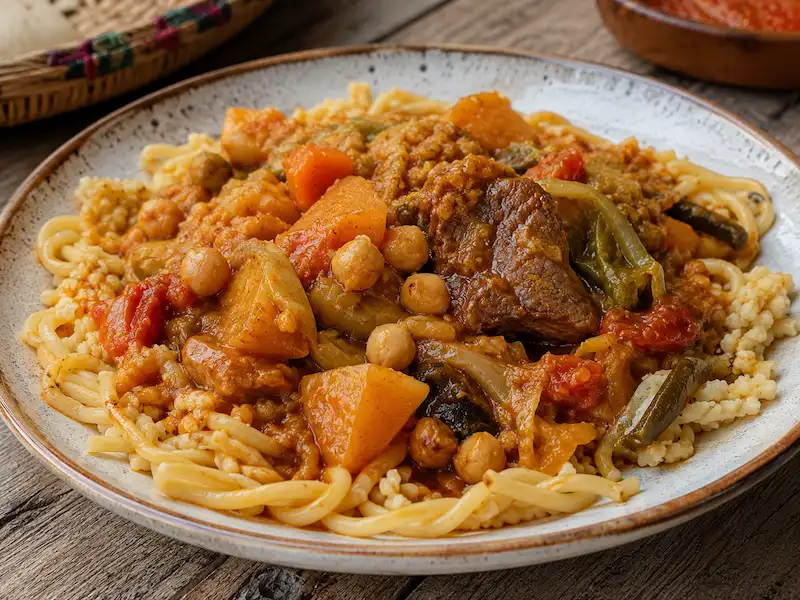 Libya
Main dish
Rishta Kiskas
Libyan hand-cut noodles steamed over chickpea, potato, and tomato stew, then tossed with sauce.
Open recipe
Libya
Main dish
Rishta Kiskas
Libyan hand-cut noodles steamed over chickpea, potato, and tomato stew, then tossed with sauce.
Open recipe
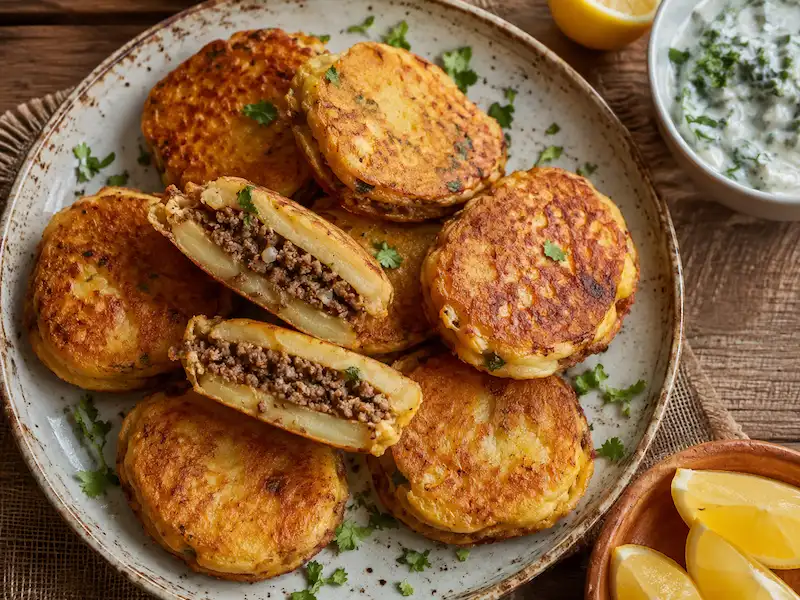 Libya
Snack
Mbatten
Libyan stuffed potato wedges filled with spiced minced meat and herbs, coated, and fried until crisp.
Open recipe
Libya
Snack
Mbatten
Libyan stuffed potato wedges filled with spiced minced meat and herbs, coated, and fried until crisp.
Open recipe
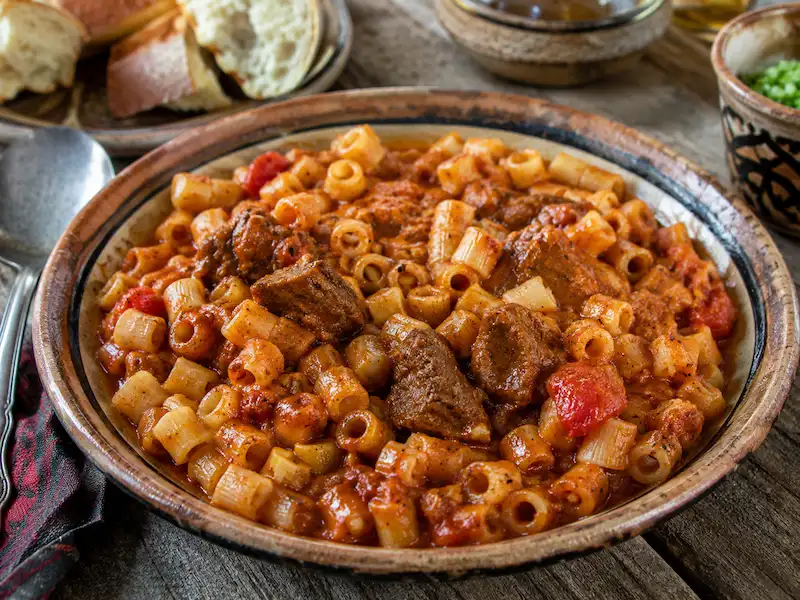 Libya
Main dish
Mbakbaka
Libyan one-pot pasta cooked directly in a spicy tomato sauce with lamb or chicken, chickpeas, and warm spices.
Open recipe
Libya
Main dish
Mbakbaka
Libyan one-pot pasta cooked directly in a spicy tomato sauce with lamb or chicken, chickpeas, and warm spices.
Open recipe
Stay inside the Libya country hub.
Compare dishes in the same course or cooking style.
Pick another dish with a nearby time commitment.
Pair a main, side, drink, or dessert where the atlas has a useful match.