Ethiopia | Side

Injera

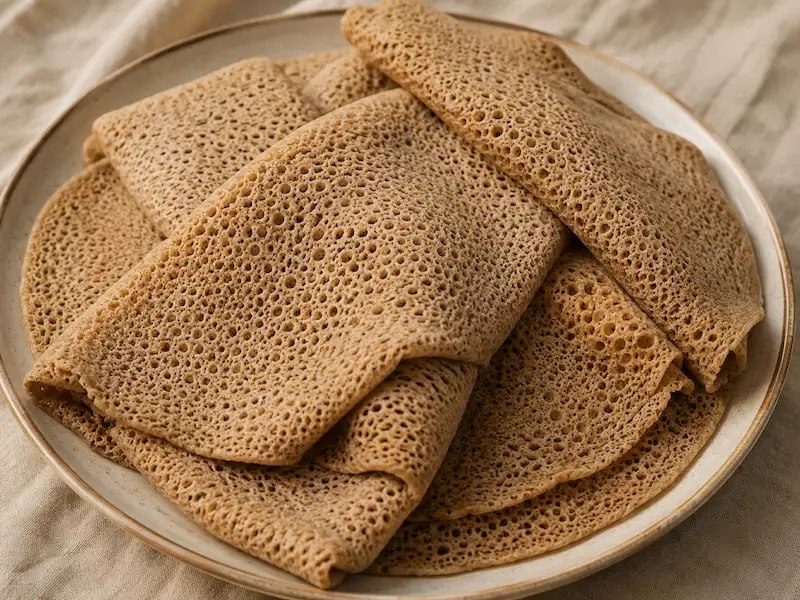
A tangy Ethiopian teff flatbread fermented for two to three days, finished with absit, and cooked on one side until full of eyes.

Country
Ethiopia
Region
East Africa
Time
2920 min
Serves
8
Level
hard
Recipe overview

What to know before you cook

Injera is patient bread. Fermentation gives the tang, absit gives the soft elastic texture, and the covered pan gives the lacy eyes.

What the dish tastes like

A tangy Ethiopian teff flatbread fermented for two to three days, finished with absit, and cooked on one side until full of eyes.

When to cook it

Best for everyday meals, with a hard cooking level and about 2920 minutes total.

What to serve alongside it

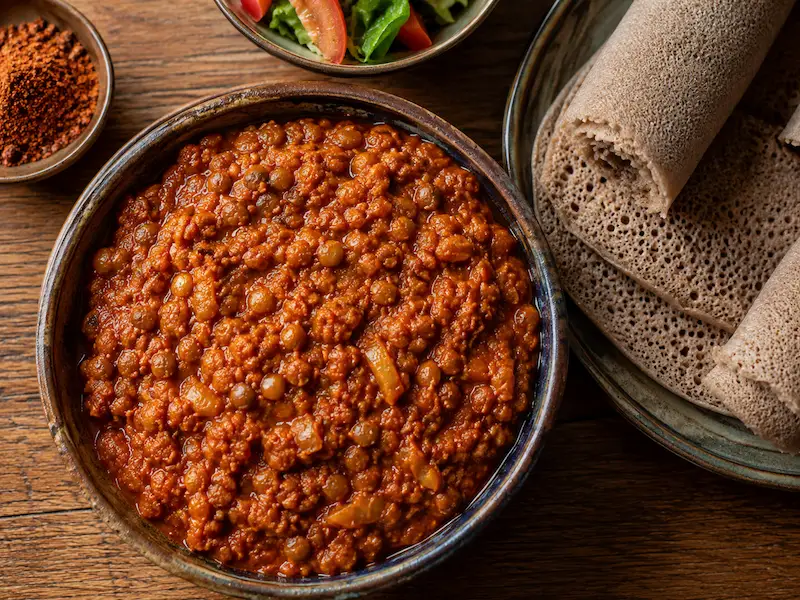
Doro wat, shiro, misir wat, tibs, kitfo, salads, and vegetable stews

Follow the collection

Injera appears in 2 AfroKitchen collections. Start with Vegetarian Africa if you want more dishes in the same mood. Vegetarian Africa

Regional lane

Injera and wot table. Stews, sauces, and flatbread built for communal injera service.

Chef watch-outs
  • Adding too much liquid after the rice goes in.
  • Stirring too often once the grains should be steaming.
  • Rushing the rest or fermentation period.
How you know it is ready
  • The grains should be tender but still distinct, with steam carrying the seasoning upward.
  • The bread or batter should smell pleasantly fermented, toasted, or nutty rather than floury.
  • The aroma should smell rounded rather than raw or sharp.
Pantry lane

teff, berbere, mitmita, niter kibbeh, split peas

Chef board

Build the table around Injera

Doro wat, shiro, misir wat, tibs, kitfo, salads, and vegetable stews

Best route from here

Injera and wot table

Social plate

Why Injera gets people talking

Injera turns a meal into a shared surface, making every stew and vegetable feel connected.

#13 Showstopper
Hook

The edible tablecloth.

Caption starter

The plate is bread. The bread is the table.

Hosting move

Layer extra rolls beside the platter so guests never hesitate to scoop.

Photo angle

Shoot the spiral texture or a platter where injera peeks under several stews.

Servings 8

Scale the dish before you shop, then use the checklist while you cook.

How to cook it

Step-by-step method

Keep the rhythm calm, watch the texture, and adjust seasoning at the end.

Back to Ethiopia
6 steps 2920 min total hard
1
Ferment the batter
Whisk teff flour with lukewarm water and starter if using. Cover loosely and ferment at room temperature until bubbly and pleasantly sour.
Two days is mild; three days is tangier.
Ferment 2880:00
2
Make absit
Whisk about 1/2 cup fermented batter with 1 cup water in a small pot. Cook, stirring, until it turns glossy and thick. Cool until warm.
Cook absit 05:00
3
Finish the batter
Stir the cooled absit back into the fermented batter. Add salt and enough water for a thin crepe-like pour.
Rest after absit 120:00
4
Cook one side
Heat a mitad or nonstick pan. Pour the batter in a spiral, cover, and cook until the surface is set and full of eyes. Do not flip.
Cook each 02:00
5
Cool and stack
Lift the injera carefully onto a cloth. Cool fully before stacking so the breads do not stick.
6
Serve
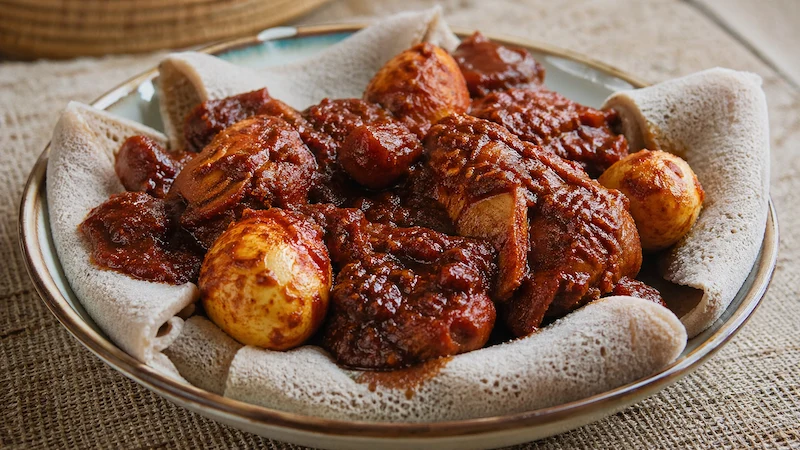
Use one injera as the platter and roll extra pieces for scooping.

Diaspora cooks often blend teff with wheat, barley, rice, or sorghum flour depending on climate and flour quality.