Nigeria | Breakfast

Akara

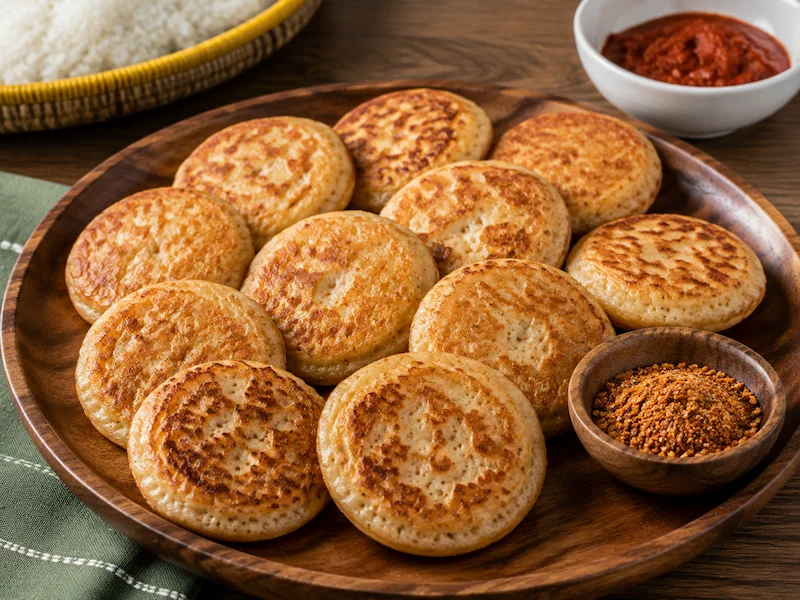
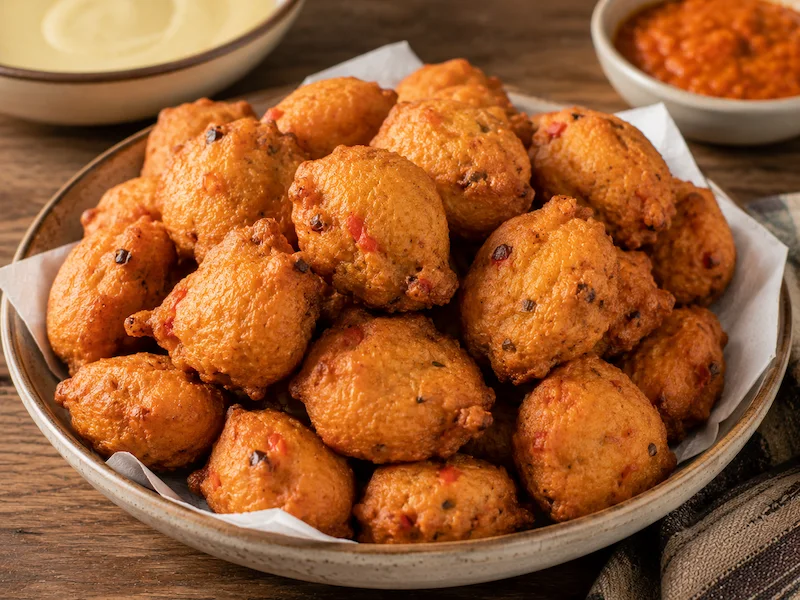
Nigerian black-eyed pea fritters blended with onion and pepper, whipped light, then fried until crisp outside and fluffy inside.

Country
Nigeria
Region
West Africa
Time
70 min
Serves
6
Level
medium
01 / Get ready

Everything you need

Tap each ingredient as you gather it. Illustrations are visual guides; follow the ingredient names and quantities.

Servings 6

Scale the dish before you shop, then use the checklist while you cook.

Jump to methodMy cookbook

02 / Let’s cook

One step at a time

Keep the rhythm calm, watch the texture, and adjust seasoning at the end.

Back to Nigeria
4 steps 45 min prep 25 min cook (check method) 70 min total medium
1
Soak and peel
Soak beans until softened, rub off the skins, and rinse until mostly clean.
Kitchen notePeeling is the work, but it gives akara its light texture.
soak beans 180:00
2
Blend thick
Blend peeled beans with onion, peppers, and as little water as possible until smooth and thick.
blend 06:00
3
Whip the batter
Beat the batter with salt until slightly lighter and airy.
Kitchen noteAir in the batter helps the fritters puff.
whip batter 05:00
4
Fry the akara
Drop spoonfuls into hot oil and fry until deep golden, turning once. Drain and serve hot.
fry batch 05:00

Across West Africa, related bean fritters appear as akara, koose, akla, and more. Nigerian versions often stay simple with onion and chile, while richer versions may add shrimp or bell pepper.

Cooking notes, photos & serving ideas
Recipe context

More about this dish

Serving ideas, regional context, and cooking cues for when you want more detail.

When to cook it

Best for breakfast, Saturday street-food plates, Ramadan iftar, or a snack tray.. Plan on a medium cook. Allow about 70 minutes total.

What to serve alongside it

Pap, custard, agege bread, ogi, hot sauce, or garri.

Regional lane

South-West and Yoruba table. Amala, ewedu, gbegiri, pepper stews, leafy soups, beans, and market foods from the Yoruba cooking orbit.

Chef watch-outs
  • Rushing the base before the raw edge has cooked out.
  • Adding all seasoning early and forgetting to adjust at the end.
  • Cooking on heat that is too high once the dish should be steaming or simmering.
How you know it is ready
  • The aroma should smell rounded rather than raw or sharp.
  • Oil, sauce, broth, or steam should look settled and deliberate.
  • The final texture should match the dish style before you plate it.
Pantry lane

palm oil, crayfish, iru or ogiri, scotch bonnet, melon seed

Chef board

Build the table around Akara

Pap, custard, agege bread, ogi, hot sauce, or garri.

Best route from here

South-West and Yoruba table

Explore more recipes