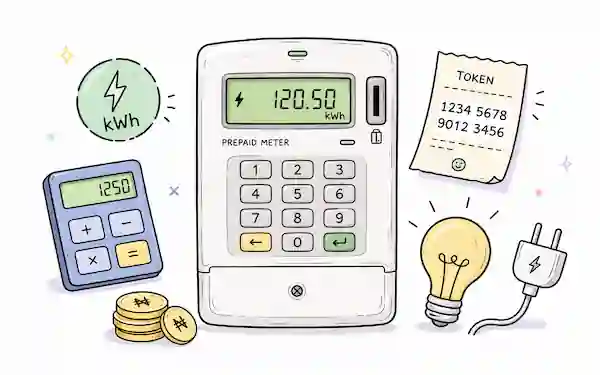
The amount paid for a prepaid token is not always divided by one simple tariff. Fixed charges, taxes, debt recovery, account type and stepped pricing can change the units delivered.
Use the latest utility tariff or receipt, subtract verified deductions, apply the correct energy rate and compare the estimate with the token receipt. Treat the result as a budget, not a guaranteed vend.
Prepaid Meter Calculator lets you enter a country, token amount, service charges and account assumptions.
Quick answer
Begin with the most recent token receipt because it shows what actually happened on your account. Estimate days of supply from your own daily use, then update the plan after each purchase.
Start with the exact job you need to complete. A useful result is tied to a real application, meeting, agreement, trip, electricity purchase, job application, image export or academic record. Write down the destination, deadline and acceptance rule before changing any settings.
Inputs to verify
| Input or decision | Evidence to keep |
|---|---|
| Token amount | Amount paid and currency |
| Tariff | Current written energy rate or band |
| Deductions | Tax, service charge, debt or other receipt line |
| Account type | Residential, business, lifeline or another class |
| Daily consumption | Recent meter difference or appliance estimate |
A country average cannot replace the tariff and deductions on a specific utility account.
Step-by-step workflow
- Find the latest official tariff notice and your recent receipt.
- Identify the portion available to buy energy after deductions.
- Apply the correct rate or stepped band without mixing units.
- Estimate days of supply using recent household consumption.
- Compare the estimate with the actual token and revise the next budget.
Keep the original file or record unchanged. Work on a copy, label the output with the date and purpose, and compare it with the source before sending or uploading it. This makes mistakes reversible and gives another person enough context to review the decision.
Understand why token units change
A higher payment does not always buy units at the same average rate when tariffs are stepped or a monthly threshold applies. The sequence and timing of purchases may matter.
Debt recovery, tax or service charges reduce the amount buying electricity. Record each deduction separately instead of hiding it inside an assumed unit price.
Estimate appliances with realistic hours and power ratings, but prefer meter readings for the whole home. Fridges, pumps and air conditioners cycle rather than drawing their label power continuously.
Checks before you rely on the result
- The tariff and account class are current.
- Charges and taxes are separated from energy value.
- Currency, kWh and money units are not mixed.
- The estimate is compared with the actual receipt.
- An unexpected difference is raised with the utility, not guessed away.
Treat any estimate as a planning aid. Fees, entry rules, grading scales, document clauses, upload limits and utility deductions can vary by provider, country and date. The receiving institution or official authority remains the final source of truth.
Create a review trail
Record the source, date and version beside the result. If another person reviews the work, ask them to check the inputs and acceptance rule rather than only the final appearance. Save their correction separately so the original decision remains traceable.
When the receiving portal, authority, employer, utility or institution rejects the output, keep the rejection message and compare it with the rule you recorded. Correct the identified mismatch first. Repeating the same export with random settings makes the problem harder to diagnose and can create conflicting copies.
Privacy and safety
Use the minimum information needed. Do not paste identity numbers, private commercial terms, academic records or personal contact details into an untrusted service. AfroTools workflows described here are designed for practical preparation, but you should still review the page notice and export before sharing it.
Do not tamper with a meter or buy tokens through an unverified seller. Use the utility's official support route for rejected tokens or account disputes.
Open the AfroTools workflow
Save actual units after each purchase to build a household-specific pattern instead of relying indefinitely on the first estimate.
The tool organises your inputs and produces a planning output. It does not guarantee acceptance, legal enforceability, admission, visa approval, electricity supply, employment or a particular grade.
Sources and verification
These sources explain the underlying standard or decision process. Reopen the live source and the relevant authority or institution before acting because requirements can change.
- World Bank report on affordable power, utilities and prepaid metering
- World Bank energy overview and access context
Related AfroTools guides
Frequently asked questions
Tariff bands, monthly thresholds, taxes, debt or service deductions may have changed. Compare both receipts line by line.
No. Usage changes with appliances, weather and occupancy. Use recent meter data and a range.
Keep the receipt and reference, confirm the meter number, and contact the official utility or vendor support channel.