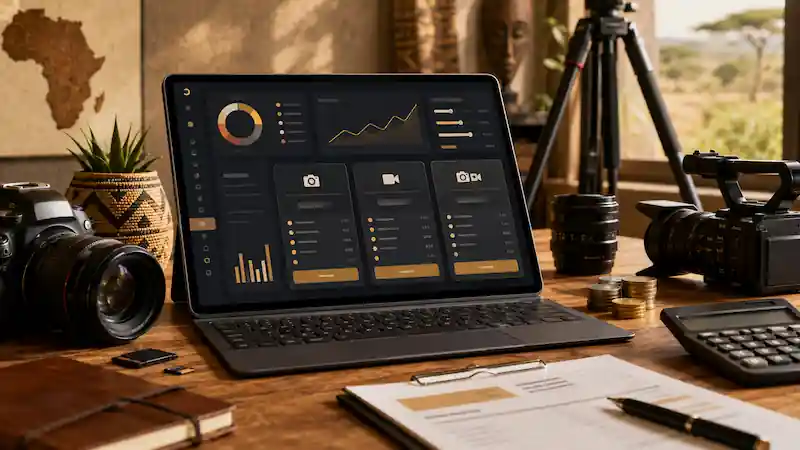
A photography quote in Kenya should price the production and the licence or usage agreed with the client. Shoot hours are only one part. Briefing, scouting, travel, assistants, equipment, selection, editing, storage, delivery, revisions and business overhead determine whether the work is sustainable.
An event budget needs two views at the same time: the experience promised to guests and the cash commitments made to suppliers. Mixing deposits, optional upgrades, tax, ticket capacity and hoped-for sponsorship creates a misleading total.
This guide targets photography pricing guide Kenya with a decision-ready workflow. Use the Photography and Videography Pricing Tool to organise the inputs, then replace every placeholder with your measurements, records and current written terms.
Sources reviewed: August 3, 2026. Prices vary by date, city, venue and supplier. Use current written quotes and confirm permits, safety, tax and music-rights obligations with the responsible authorities.
Quick answer
Define the subject, location, date, coverage, crew, equipment, deliverables, edit level, turnaround, revisions and intended use. Estimate all labour hours, add hired equipment, travel, permits, accommodation and storage, allocate overhead, then state usage and payment terms. Keep model releases, location permissions and data handling appropriate to the job.
The table below is the minimum evidence pack. A task is not complete merely because somebody says it has been handled. Save the document, measurement, quote, portal acknowledgement or transaction reference that supports the answer.
| # | Input or decision | Evidence to keep |
|---|---|---|
| 1 | Creative brief | Subject, style, location, schedule and shot priorities |
| 2 | Production plan | Crew, equipment, permits, travel and access |
| 3 | Deliverables | Image or video count, format, resolution and delivery date |
| 4 | Post-production | Selection, editing, retouching and included revisions |
| 5 | Commercial terms | Usage, exclusivity, deposit, cancellation and archive period |
Why this calculation or checklist matters
List scope before price. Ask every supplier for inclusions, exclusions, hours, crew, equipment, transport, overtime, cancellation and payment milestones. For ticketed events, separate gross sales from fees, taxes, complimentary tickets, refunds and production cost.
A two-hour portrait session and a two-hour commercial shoot may have different pre-production, lighting, retouching and usage. Quoting only by camera time makes hidden editing and client revisions free by accident.
A good working file also makes disagreement cheaper. Instead of arguing about a total, the people involved can inspect the quantity, unit, date, source and assumption that produced it. That is the difference between a reusable estimate and a number copied into a message.
Step-by-step workflow
- Step 1. Translate the client request into a written shot list and deliverable schedule.
- Step 2. Estimate preparation, travel, setup, shoot, backup, edit and administration hours.
- Step 3. Price owned and hired equipment, crew, permits and location costs separately.
- Step 4. Define selection, retouching, video editing and included revision rounds.
- Step 5. State the agreed usage, credit, exclusivity and delivery method in plain language.
- Step 6. Collect the deposit, preserve approvals and archive only for the promised period.
Time beyond the shoot
Pre-production can include calls, scouting, schedules, shot lists and permits. Post-production can exceed shoot time when the deliverable needs detailed retouching, sound, colour or multiple exports.
Use an internal hour estimate even when selling a package. That exposes work that the package price must still cover.
- Briefing and preparation
- Travel and setup
- Capture time
- Editing, delivery and administration
Deliverables and revisions
State how many edited files the client receives, whether raw files are included, the format, resolution, delivery date and gallery or storage period.
Define revision rounds and what counts as a correction versus a new creative direction. Obtain approval at useful checkpoints instead of editing the whole project on an unconfirmed style.
- Number of final assets
- Edit and retouch level
- Included revision rounds
- Turnaround and delivery method
Usage, permits and privacy
Commercial use, paid advertising, exclusivity and long-term campaigns can differ from personal event use. Put the agreed use in writing and seek legal advice for complex licensing.
Kenya filming or location requirements may apply to some work, especially particular productions or crews. Protect client and subject data, obtain appropriate releases and do not upload sensitive material to AI or network services without permission.
- Personal or commercial use
- Duration, territory and channels
- Model and location permission
- Secure storage and deletion commitment
Build an evidence pack another person can audit
Maintain a single commitments register. For every supplier or revenue partner, record scope, contract value, deposit, balance, due date, approver, receipt and remaining obligation. Keep guest or ticket inventory in a separate control. Update the forecast when a contract is signed or a payment clears, not merely when somebody says the arrangement is likely.
Use short filenames that begin with the date and describe the record. Keep the original source separate from calculations and annotations. Where a file contains identity, financial, health or commercial data, share the minimum necessary information and use the official or trusted channel. A checklist should reduce exposure, not create another uncontrolled copy of sensitive material.
Set the decision gate
At each approval gate, compare committed cost and available cash with the minimum viable event. Freeze additions when the reserve or settlement schedule is no longer safe. Confirm venue, safety, rights, tax and permit responsibilities with the relevant party, and preserve the written answer beside the budget rather than hiding compliance inside a miscellaneous line.
Write a clear stop condition before commitment. A stop condition might be a missing official search, an unverified payment account, an unresolved name mismatch, an unaffordable pressure case, an unapproved safety specification or a supplier quote that excludes essential scope. When it appears, pause and resolve the evidence rather than pushing the same uncertain assumption into the final output. Record who made the final decision, the date and the evidence they reviewed so a later update has an honest starting point.
Stress-test the result
Use a minimum viable event, the approved plan and a stretch version. For ticketed events, also run low, expected and high paid attendance. Do not count sponsor discussions or unpaid pledges as cash. A break-even result is a planning threshold, not a promise that tickets will sell.
Add one location change, an assistant, an equipment hire and an extra revision round. If the original package cannot absorb the work, define a change-order price rather than quietly reducing quality or working unpaid.
Write the decision beside the scenario. Examples include delaying a purchase, collecting a larger deposit, reducing scope, changing packaging, adding route density, choosing a different loan, or asking a qualified adviser to verify an exception. A scenario without a decision is only another spreadsheet column.
Common mistakes to avoid
- Charging only for time holding the camera.
- Leaving final file count and edit level undefined.
- Giving unlimited revisions by omission.
- Ignoring commercial usage and exclusivity.
- Sending private client material to third-party services without consent.
One final check catches many errors: ask whether a different person could reproduce the answer from the saved inputs. If not, label the missing assumption before using the result in a quote, purchase, application or public promise.
Use the AfroTools workflow
Open the Photography and Videography Pricing Tool and enter the dated inputs from your evidence pack. Keep units and currencies consistent. Save or export the result where the tool supports it, then give the version a descriptive filename that includes the date and scenario.
Enter labour, equipment, travel and post-production separately, then attach the exported estimate to the written brief. The tool does not grant permits, draft a rights licence or store client media.
AfroTools does not submit the application, certify the document, approve the budget, select the supplier or guarantee the outcome. The output is a private planning aid that helps you ask better questions and keep a reviewable record.
Sources checked on August 3, 2026
Primary authorities and practical technical references were preferred. Reopen the live source before acting because forms, fees, product specifications, thresholds and portal steps can change.
- Kenya Film Commission filming requirements
- Kenya government filming and photography procedures
- Kenya Revenue Authority eTIMS information
- Kenya Office of the Data Protection Commissioner
Price the complete Kenyan production
Turn the evidence into a dated calculation or checklist before you commit money, time or documents.
Open Photography and Videography Pricing Tool →Related AfroTools guides
Frequently asked questions
Price the complete scope, time, deliverables, equipment, travel, usage, overhead and current third-party quotes.
Whether separate or packaged, estimate and cover selection, editing, retouching, exports and revisions.
State the deliverables clearly. Raw-file inclusion is a commercial and workflow decision, not an automatic assumption.
They describe how, where and for how long the client may use the work. Seek legal advice for complex licences.
This pricing tool organises quote inputs and does not need client media to calculate the estimate.