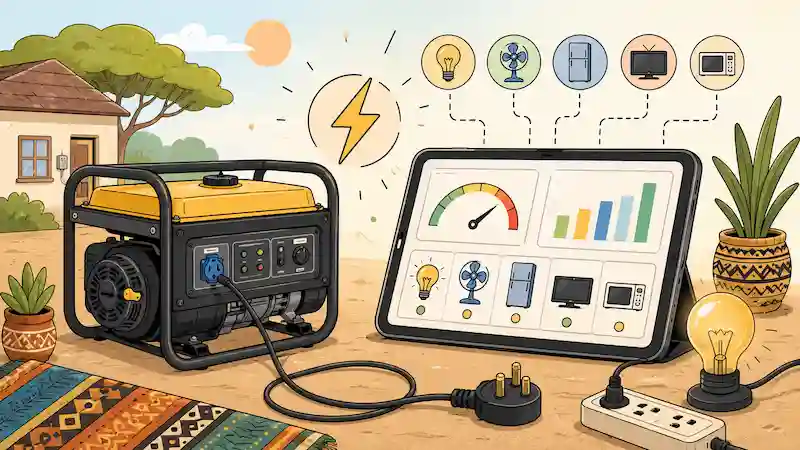
The right generator size for a Nigerian home comes from the loads that must run together and the largest starting surge, not from the number of rooms. Refrigerators, pumps and air conditioners can draw much more power briefly at startup than during normal operation.
A material or power estimate is only as reliable as its measurements, product specification and safety assumptions. Area alone is rarely enough: thickness, overlap, openings, wastage, starting surge and usable capacity can change the purchase.
This guide targets generator size for home Nigeria with a decision-ready workflow. Use the Generator Size Calculator to organise the inputs, then replace every placeholder with your measurements, records and current written terms.
Sources reviewed: August 3, 2026. This is a planning estimate, not a structural design, electrical design, bill of quantities or installer quotation. A qualified professional must verify safety-critical decisions.
Quick answer
List essential appliances, read their nameplate running power, identify motor or compressor starting requirements, and decide which loads may start together. Sum simultaneous running load, add the relevant surge, account for power factor and manufacturer rating conditions, then have a qualified electrician verify capacity, transfer switching, earthing, protection, cable size, ventilation and fuel safety.
The table below is the minimum evidence pack. A task is not complete merely because somebody says it has been handled. Save the document, measurement, quote, portal acknowledgement or transaction reference that supports the answer.
| # | Input or decision | Evidence to keep |
|---|---|---|
| 1 | Essential load list | Appliance nameplate, quantity and intended simultaneous use |
| 2 | Running power | Measured or manufacturer watts and power factor |
| 3 | Starting surge | Motor, compressor or pump startup requirement |
| 4 | Generator rating | Continuous versus standby capacity and site conditions |
| 5 | Installation safety | Electrician-approved changeover, protection, earthing and ventilation |
Why this calculation or checklist matters
Keep a measurement sheet beside the estimate. Label every dimension and unit, identify the chosen product, record the manufacturer coverage or effective width, and separate measured quantity from contingency. Structural and electrical choices still require a competent professional.
Oversizing increases purchase and light-load operating cost, while undersizing causes voltage drop, trips, poor motor starting and equipment stress. A household also needs a load-management plan because not every appliance must run during an outage.
A good working file also makes disagreement cheaper. Instead of arguing about a total, the people involved can inspect the quantity, unit, date, source and assumption that produced it. That is the difference between a reusable estimate and a number copied into a message.
Step-by-step workflow
- Step 1. Divide appliances into essential, optional and prohibited outage loads.
- Step 2. Record nameplate watts or current and voltage for every essential item.
- Step 3. Identify the largest motor or compressor surge and which other loads remain on during startup.
- Step 4. Convert between watts and volt-amperes only with an appropriate power-factor assumption.
- Step 5. Compare calculated demand with the generator's continuous rating and manufacturer conditions.
- Step 6. Ask a qualified electrician to verify installation, protection, exhaust, fuel storage and operating procedure.
Build a simultaneous load inventory
Do not add every appliance in the house if some will be switched off. Create an outage operating plan and sum the loads that realistically run together.
Use measured or nameplate information rather than online averages where possible. Age, mode and model can change actual demand.
- Lighting and electronics
- Refrigerator and freezer
- Water pump
- Air conditioner or other large load
Running watts, surge and kVA
Running power describes steady demand. Starting surge is the brief higher requirement when some motors and compressors start. The generator must tolerate the relevant combination.
Generator labels may use kVA while appliances use watts. Conversion depends on power factor, and ratings may differ between continuous and standby service. Use manufacturer data and professional review.
- Total simultaneous running watts
- Largest relevant starting surge
- Power-factor assumption
- Continuous generator rating
Installation is part of sizing
A correctly sized set can still be dangerous with improvised backfeeding, indoor exhaust, poor earthing, inadequate cable, unprotected circuits or unsafe fuel storage.
Plan a compliant transfer arrangement and locate the generator so exhaust and heat do not enter occupied spaces. Follow the manufacturer and responsible electrical-safety requirements.
- Changeover or transfer equipment
- Cable and circuit protection
- Earthing and bonding
- Ventilation, exhaust and fuel controls
Build an evidence pack another person can audit
Walk the site with the drawing, product data and estimate. Check each dimension at the point it is used and photograph labels or conditions that affect coverage, thickness, overlap, rating or safety. Record who measured, the instrument, date and unit. If the drawing and site disagree, stop the quantity decision and obtain a resolved instruction instead of averaging the two numbers.
Use short filenames that begin with the date and describe the record. Keep the original source separate from calculations and annotations. Where a file contains identity, financial, health or commercial data, share the minimum necessary information and use the official or trusted channel. A checklist should reduce exposure, not create another uncontrolled copy of sensitive material.
Set the decision gate
Ask the responsible engineer, electrician, quantity surveyor, installer or manufacturer to confirm the safety-critical specification and installation assumptions. The commercial order should name the exact product, size, rating, finish and accessory scope. Keep substitutions pending until their dimensions and performance have been recalculated and approved.
Write a clear stop condition before commitment. A stop condition might be a missing official search, an unverified payment account, an unresolved name mismatch, an unaffordable pressure case, an unapproved safety specification or a supplier quote that excludes essential scope. When it appears, pause and resolve the evidence rather than pushing the same uncertain assumption into the final output. Record who made the final decision, the date and the evidence they reviewed so a later update has an honest starting point.
Stress-test the result
Calculate a measured case, a procurement case and a contingency case. The measured case shows the theoretical quantity. The procurement case rounds to the packs, sheets or equipment sizes actually sold. The contingency case adds only an explained allowance for cutting, breakage, rework, surge or future load.
Start the largest motor while the refrigerator, lights and essential electronics are already running. Also model one future essential load. If the result requires a much larger set, consider managed starting or a revised essential-load plan with the electrician.
Write the decision beside the scenario. Examples include delaying a purchase, collecting a larger deposit, reducing scope, changing packaging, adding route density, choosing a different loan, or asking a qualified adviser to verify an exception. A scenario without a decision is only another spreadsheet column.
Common mistakes to avoid
- Sizing from house or room count instead of an appliance inventory.
- Adding running watts but ignoring motor starting surge.
- Treating standby kVA as guaranteed continuous watts.
- Using a universal power factor without checking equipment data.
- Connecting a generator through an unsafe improvised backfeed.
One final check catches many errors: ask whether a different person could reproduce the answer from the saved inputs. If not, label the missing assumption before using the result in a quote, purchase, application or public promise.
Use the AfroTools workflow
Open the Generator Size Calculator and enter the dated inputs from your evidence pack. Keep units and currencies consistent. Save or export the result where the tool supports it, then give the version a descriptive filename that includes the date and scenario.
Add only the intended simultaneous loads, mark surge equipment and save the load list for the electrician. The result is a planning capacity, not approval of wiring, generator placement or connection method.
AfroTools does not submit the application, certify the document, approve the budget, select the supplier or guarantee the outcome. The output is a private planning aid that helps you ask better questions and keep a reviewable record.
Sources checked on August 3, 2026
Primary authorities and practical technical references were preferred. Reopen the live source before acting because forms, fees, product specifications, thresholds and portal steps can change.
- NERC Nigerian Electricity Supply and Installation Standards
- NERC technical requirements and sizing context
- Standards Organisation of Nigeria
- NERC generator-set conformity context
Build a Nigerian home generator load list
Turn the evidence into a dated calculation or checklist before you commit money, time or documents.
Open Generator Size Calculator →Related AfroTools guides
Frequently asked questions
It depends on simultaneous running loads, starting surge, power factor and operating plan, not the number of rooms.
kVA is apparent power and kW is real power. Their relationship depends on power factor.
Add loads that may run together and test the largest relevant startup event.
Improvised backfeeding is dangerous. Use a qualified electrician and an appropriate transfer arrangement.
No. A qualified professional must verify equipment, wiring, protection, earthing, ventilation and fuel safety.